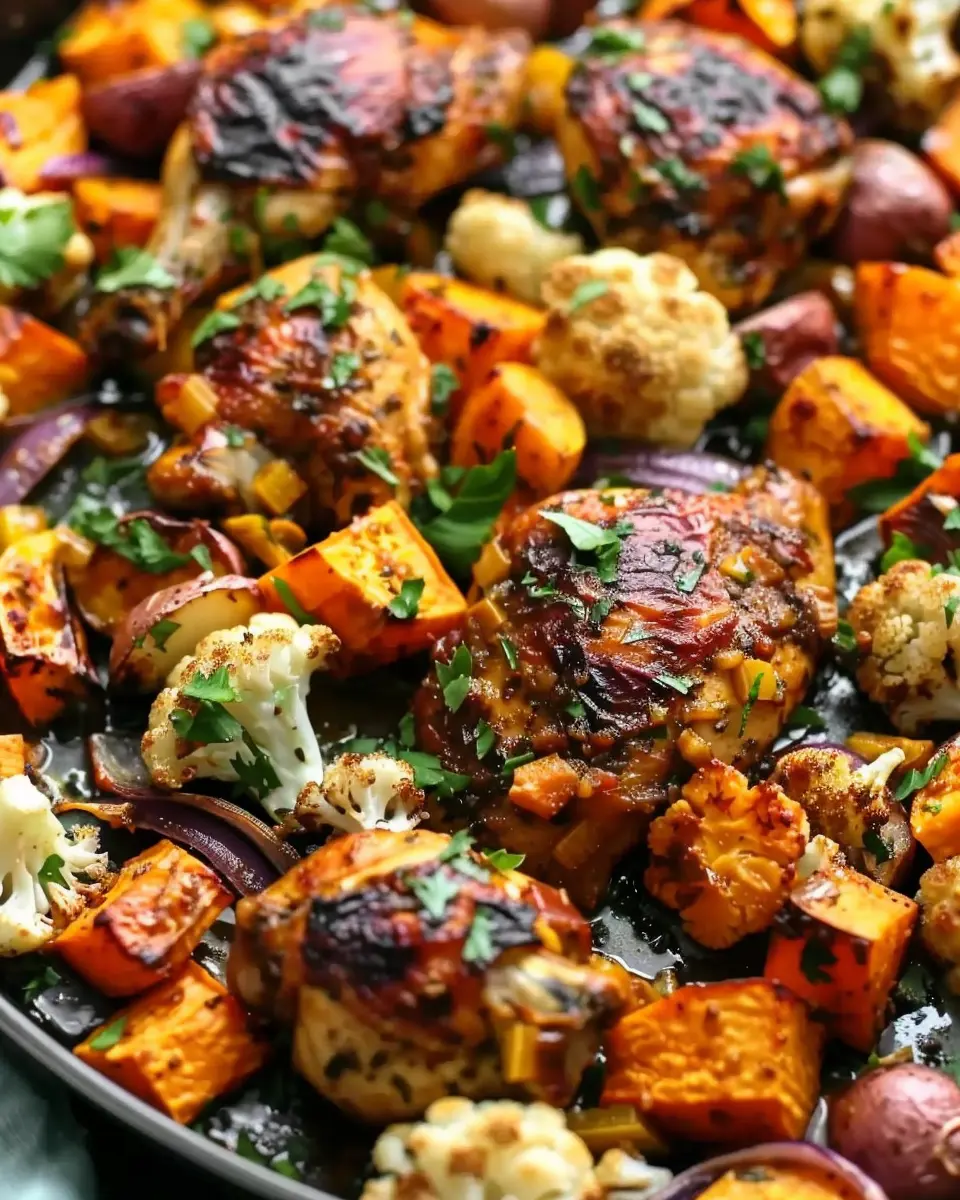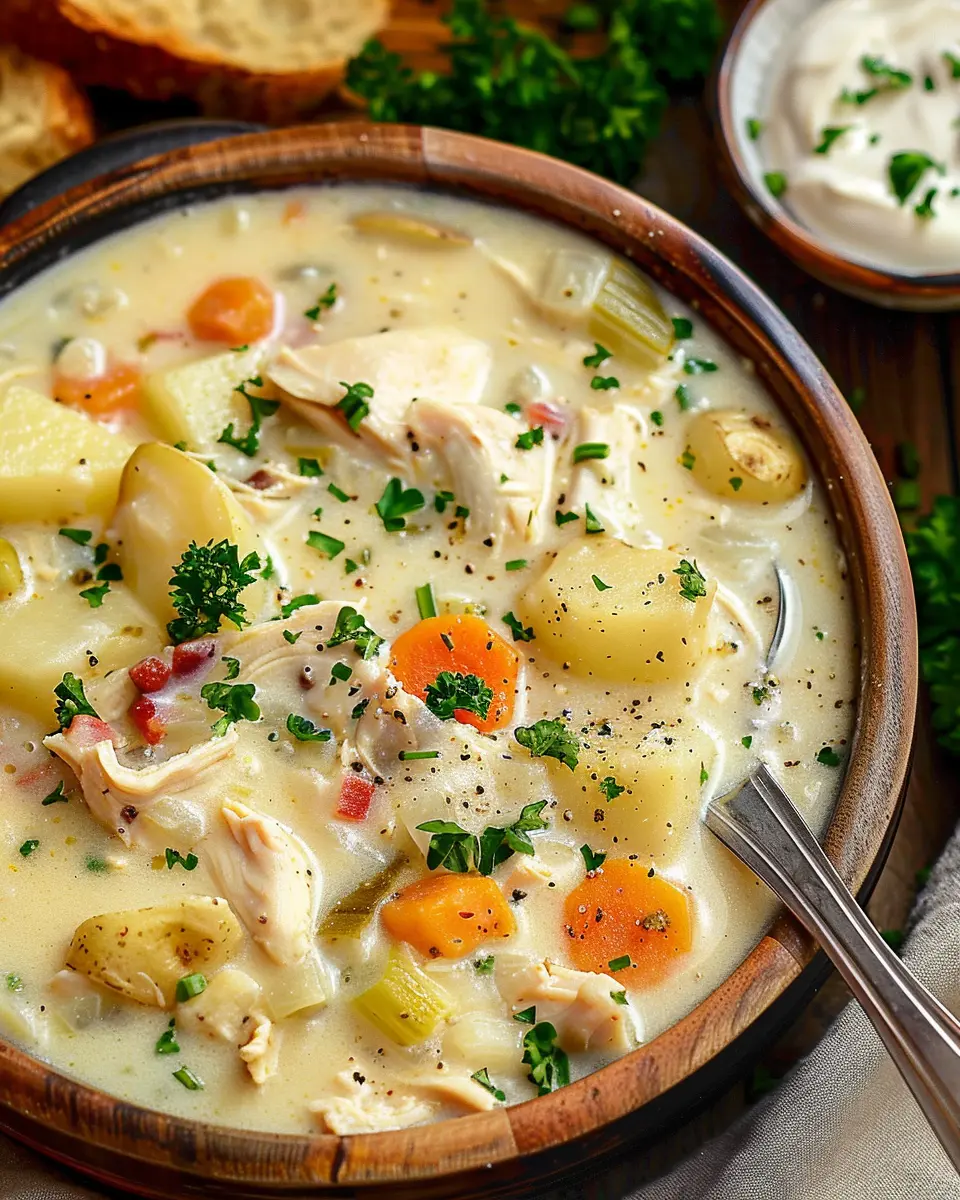
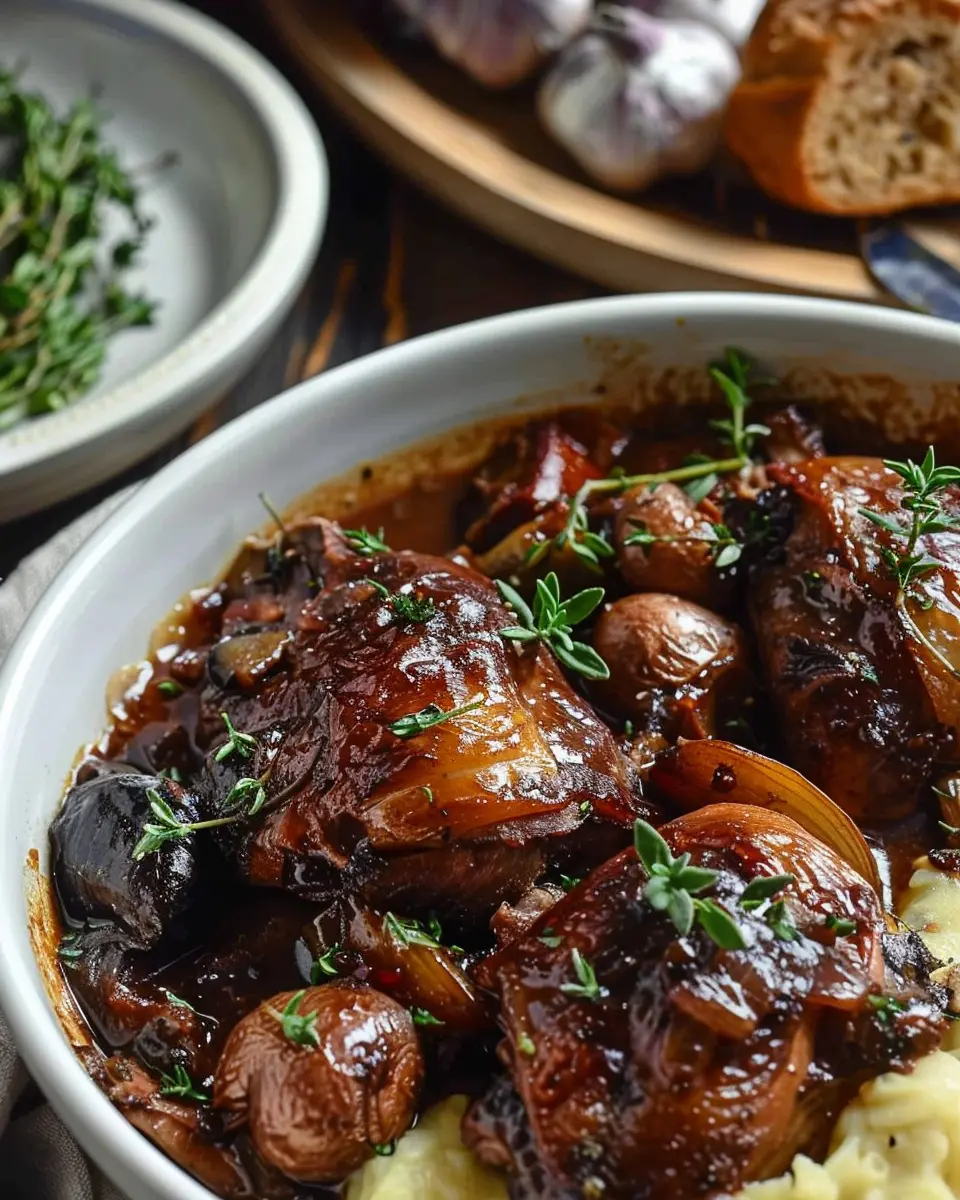
Introduction to Coq au Vin
What is Coq au Vin and Why Is It Special?
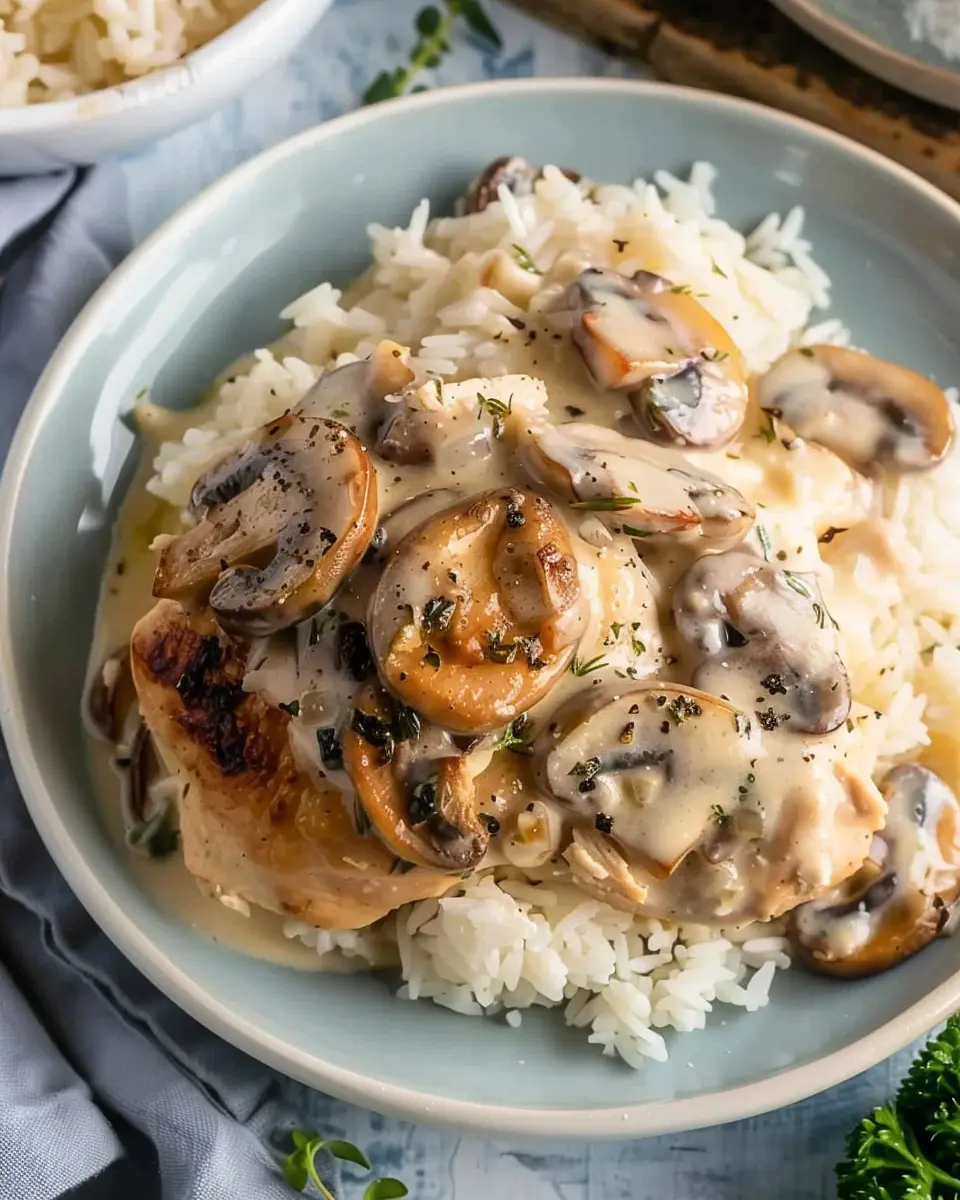
If you’re seeking a dish that embodies the essence of French cuisine, look no further than Coq au Vin. This classic recipe isn’t just a delightful blend of ingredients; it’s a story steeped in history. Originating from rural France, Coq au Vin translates to “Rooster in Wine.” Traditionally, the dish was a way to tenderize tougher cuts of meat through slow cooking. However, for home cooks today, it serves as a celebration of rich flavors, hearty textures, and comforting aromas.
At its core, Coq au Vin features chicken simmered alongside robust flavors, such as turkey bacon, chicken ham, mushrooms, and aromatic vegetables. Surprisingly, the dish is not just about chicken but also highlights the beauty of beef, which adds an extra depth to the overall dish. You might wonder, what makes this dish so beloved? It’s the fusion of ingredients and cooking techniques that creates a symphony of flavors. The slow-cooking process allows each ingredient to marry together, producing a meal that feels like a warm hug on a plate.
One of the joys of making Coq au Vin is the versatility it offers. Depending on regional variations, some might opt for earthy mushrooms, while others focus on aromatic herbs. If you’re aiming to impress at your next dinner party, this dish is sure to captivate your guests’ taste buds—and let’s be honest, who doesn’t enjoy the warmth of a beautifully cooked meal shared among friends?
Pairing this dish with crusty bread or creamy mashed potatoes only enhances the experience, making it a fulfilling meal that’s perfect for any occasion. If you’re curious to dive deeper into the world of French cooking, check out resources like the Institute of Culinary Education or Bon Appétit for tips to refine your culinary skills.
In the following sections, we’ll guide you through creating a mouthwatering Coq au Vin. Get ready to turn your kitchen into a French bistro!
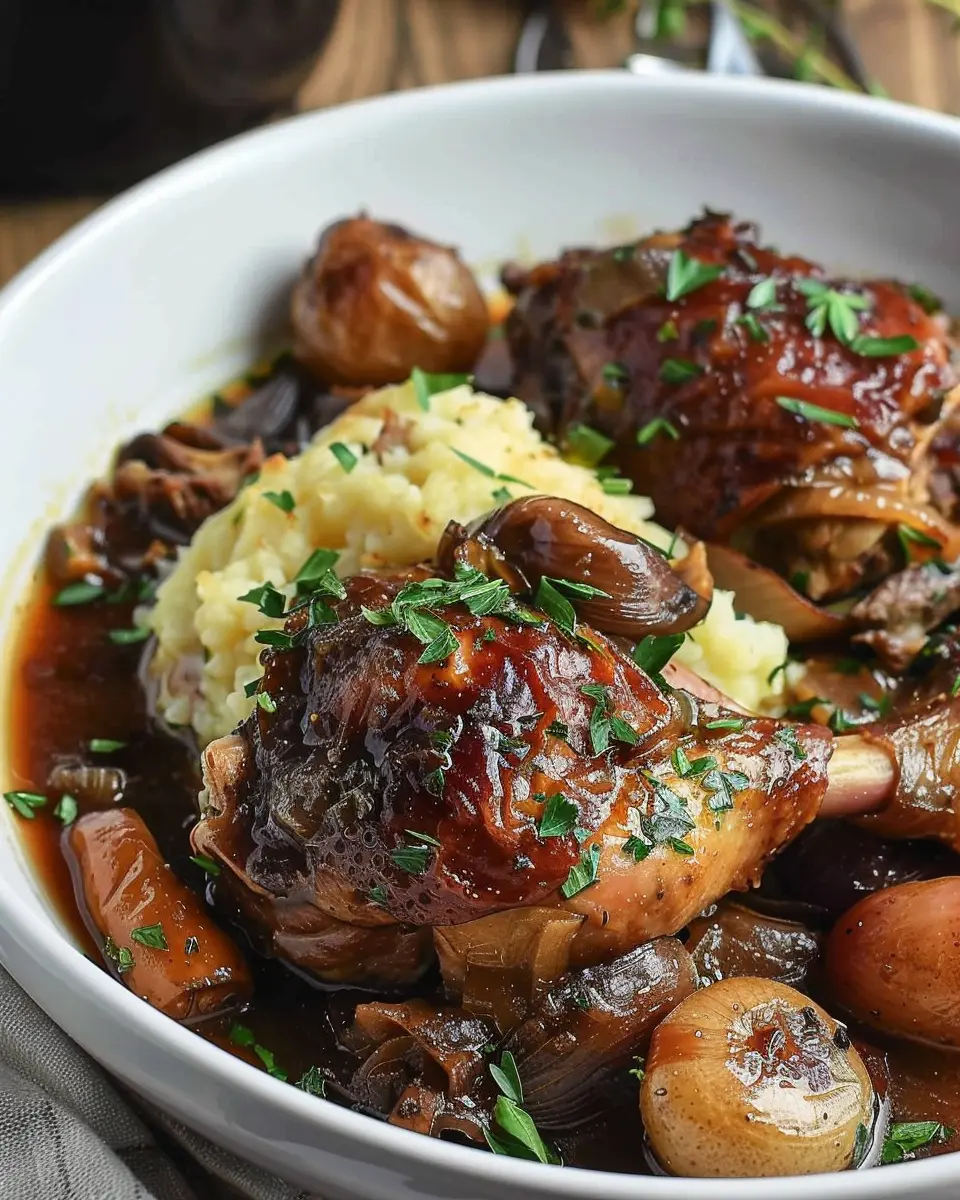
Ingredients for Coq au Vin
Cooking Coq au Vin at home is a delightful way to dive into French cuisine. By gathering your ingredients, you set the stage for a wonderfully flavorful dish that warms the soul.
Essential Ingredients
To create a classic Coq au Vin, you’ll need these fundamental ingredients:
- Chicken: Opt for bone-in, skin-on pieces for enhanced flavor.
- Turkey Bacon: Adds a savory richness to your dish.
- Onions: Pearl onions work best, but any onions will do.
- Carrots: Adds a touch of sweetness and color.
- Mushrooms: Use cremini or button mushrooms for a hearty texture.
- Beef Stock: A solid base for your sauce, giving depth to your dish.
- Garlic: Fresh cloves bring an aromatic punch.
- Herbs: Thyme and bay leaves elevate the flavor profile.
Optional Ingredients for Customization
Feel free to get creative! Consider these options to tailor your Coq au Vin to your taste:
- Chicken Ham: Enhance the meaty flavor, if you enjoy a little extra protein.
- Root Vegetables: Add parsnips or turnips for a seasonal twist.
- Peas: For freshness, stir in some peas just before serving.
For tips on prepping your ingredients, check out resources like Taste of Home for useful techniques. With the right ingredients, you’re not just cooking; you’re creating a moment to savor with loved ones.
Preparing Coq au Vin
Creating the perfect Coq au Vin is about laying the right foundation with beautiful ingredients and thoughtful preparation. This classic dish, while rich in flavor, can be broken down into manageable steps. Let’s dive into the process together!
Prepping the Chicken and Vegetables
First things first, prep is key. Start by gathering your ingredients:
- 1 whole chicken, cut into pieces
- 4 slices of turkey bacon (a fantastic substitute for traditional bacon)
- 2 large carrots, sliced
- 1 large onion, chopped
- 3 cloves of garlic, minced
- 2-3 sprigs of fresh thyme
- 2 bay leaves
- Salt and pepper, to taste
Begin by trimming any excess fat from the chicken, then season it generously with salt and pepper. This will help to deepen the flavor throughout the cooking process. Next, wash and chop the vegetables. The more uniform you can make the cuts, the better they will cook together.
Cooking the Turkey Bacon
In a large, heavy-bottomed pot or Dutch oven, cook the turkey bacon over medium heat until it becomes crispy. This usually takes about 5-7 minutes. Not only does turkey bacon add a unique smoky flavor, but it also provides a lovely base for the dish. Once cooked, remove the turkey bacon and let it drain on a paper towel while leaving the rendered fat in the pot. This step infuses your dish with flavor, setting the stage for the next steps.
Browning the Chicken
Now it’s time to brown the chicken pieces! Add them to the pot, skin-side down. Don’t overcrowd them; if necessary, do this in batches. You want to achieve a beautiful golden color on each piece of chicken, which can take about 6-8 minutes. Remember, this browning process is crucial. It not only helps in flavor development but also creativity in your cooking technique. Once browned, remove the chicken from the pot and set it aside.
Sautéing the Vegetables
With the chicken out of the way, it’s time to fully embrace those aromatic veggies. Add the chopped onions, carrots, and minced garlic to the remaining turkey bacon drippings in the pot. Sauté them for around 5-7 minutes until the onions become translucent. This is where your kitchen will begin to smell heavenly! If you’re in a pinch for time, check out some helpful tips on quick vegetable prep here.
Adding Remaining Ingredients and Baking
Once your vegetables are perfectly sautéed, it’s time to bring everything together into a symphony of flavor. Add the browned chicken back into the pot, followed by your turkey bacon, thyme, bay leaves, and some low-sodium chicken broth to cover everything. For an extra touch, you might consider adding some sliced mushrooms or olives for a twist.
Cover the pot and transfer it to a preheated oven at 350°F (175°C) for about 1.5 hours. It’s during this slow cooking phase that the chicken becomes incredibly tender, and all the flavors meld beautifully.
When it’s done, the Coq au Vin is ready to be served with creamy mashed potatoes or perhaps some crusty bread for dipping. Remember, the longer it sits, the better it gets! You’ll soon find that this richly flavorful dish becomes a favorite among friends and family, perfect for any gathering. Happy cooking!
For more tips on perfecting your cooking techniques, don’t forget to check out sources such as the James Beard Foundation.
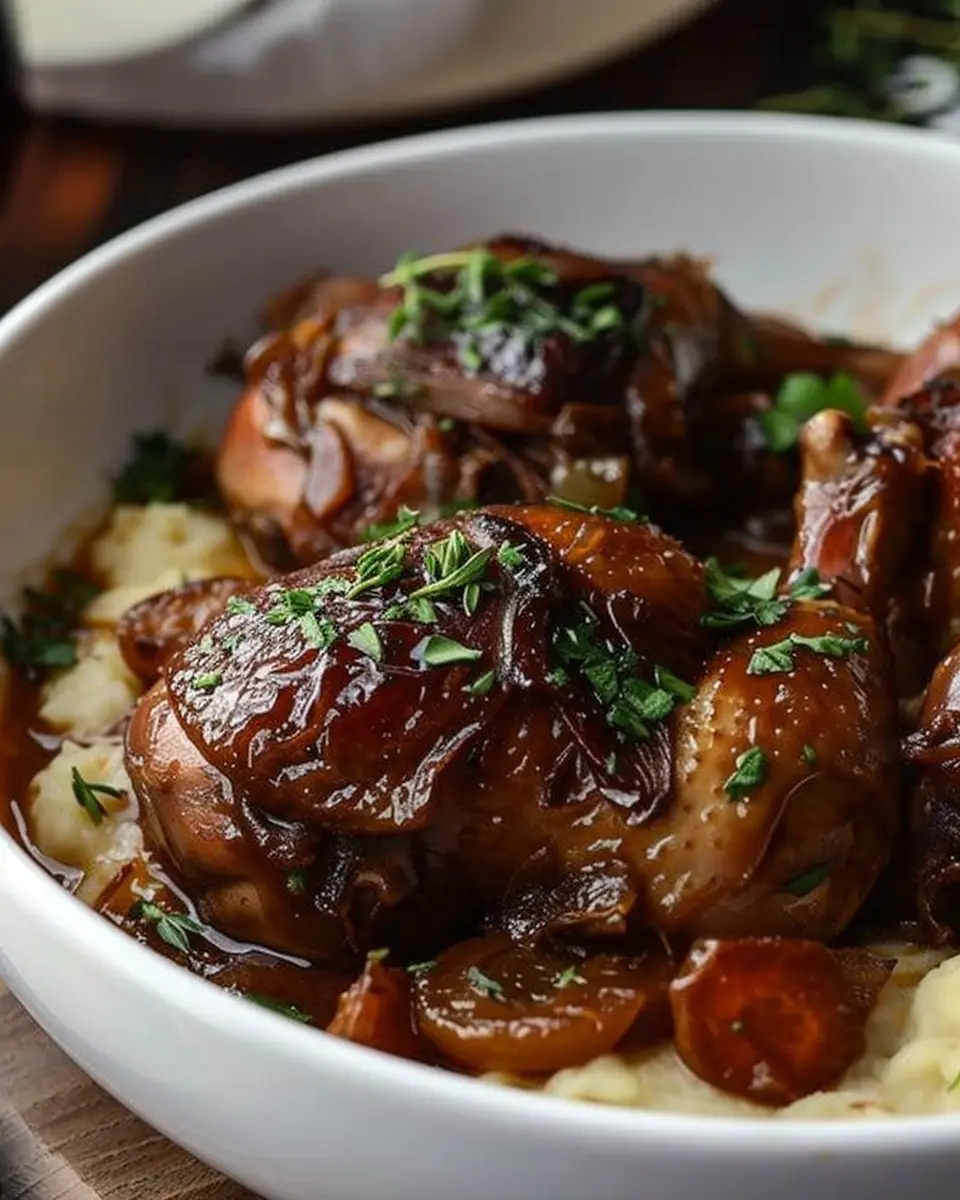
Variations on Coq au Vin
When it comes to Coq au Vin, creativity is your best friend. This classic dish can easily transform into something new with just a few tweaks. Here are some delightful variations that will keep your taste buds tingling.
Coq au Vin with Chicken Ham
Why not switch things up with Chicken Ham? This variation combines the tender flavors of chicken with the rich, savory profile of chicken ham. Simply replace traditional turkey bacon with chicken ham, adding it to your pot with mushrooms and aromatics. The result is a heartwarming dish with a slightly smokier undertone, perfect for cozy dinners. It pairs wonderfully with crusty bread or creamy mashed potatoes.
Vegetarian Coq au Vin
Don’t worry, veggie lovers, you’re not left out! For a delicious vegetarian Coq au Vin, swap the chicken for hearty mushrooms and add a variety of seasonal vegetables. Think carrots, potatoes, and perhaps some lentils for protein. Using vegetable broth as a base, along with a splash of balsamic vinegar for acidity, will give you a sumptuous dish rich in flavors. Garnish with fresh herbs like thyme or parsley for a pop of color and taste.
Spicy Coq au Vin
If you’re craving something with a kick, consider adding a spicy twist. Incorporate chili flakes or diced jalapeños to the pot to dial up the heat. You can also experiment with a touch of smoked paprika for depth. This spicy Coq au Vin will be sure to impress anyone looking for a dish that awakens the senses.
Feeling inspired? Check out Bon Appétit for more cooking tips or Serious Eats for flavorful variations. Each of these takes on the traditional Coq au Vin promises to bring warmth and new flavor to your kitchen table.
Cooking Notes for Coq au Vin
Make-Ahead Tips
Preparing Coq au Vin in advance can save vital time during a busy week. You can marinate the chicken a day before, allowing those flavors to deepen. Just be sure to store it in the refrigerator. After cooking, let the dish cool, then cover and refrigerate it. Reheating the next day will help meld the flavors even further; in fact, many argue that Coq au Vin tastes better after a night in the fridge!
Suggested Cooking Equipment
To achieve that beautifully rustic flavor and texture in your Coq au Vin, having the right equipment on hand makes a world of difference. Here’s what you’ll need:
- A heavy Dutch oven or large pot to handle the slow cooking
- A sharp chef’s knife for slicing and dicing your ingredients
- A cutting board
- Measuring cups and spoons for accuracy
If you want to dive deeper into the cooking science, check out resources like Serious Eats for expert insights on equipment. Happy cooking!
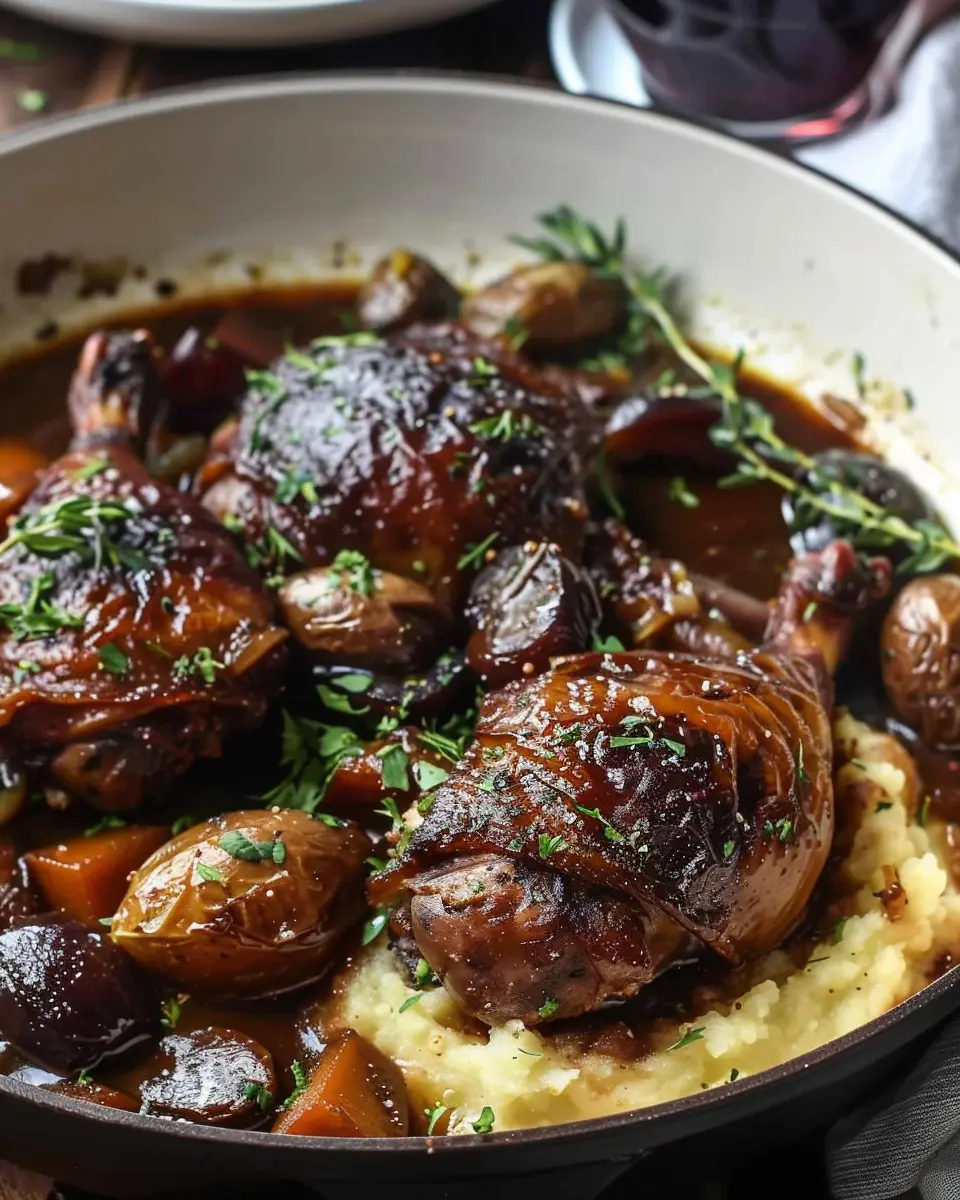
Serving Suggestions for Coq au Vin
Best Side Dishes to Pair
When serving your Coq au Vin, the choice of sides can elevate your dining experience. Consider these delicious pairings:
- Mashed Potatoes: Creamy and buttery, they soak up the flavorful sauce beautifully.
- Crusty Bread: A must for sopping up every delicious drop. Think French baguette or a rustic sourdough.
- Steamed Green Beans: Their freshness adds a nice contrast to the rich sauce, keeping your plate vibrant.
- Mediterranean Quinoa: Packed with nutrients, this nutty option can refresh your palate.
These pairings not only complement your Coq au Vin but also create a well-rounded meal. For more creative ideas, check out resourceful sites like Food52 or Bon Appétit.
Ideal Serving Presentation
Presentation can make your meal feel special! Serve your Coq au Vin in a deep bowl to allow for a generous amount of sauce.
- Garnish: A sprinkle of fresh parsley adds a pop of color and freshness.
- Arrange the Sides: Neatly arrange your bread, potatoes, and veggies to create an inviting plate.
- Accompany with Bisque: Consider serving a light soup or bisque as a starter to set the tone for a lovely evening.
With thoughtful presentation and the right sides, your Coq au Vin can transform a simple meal into a memorable dining experience.
Time Breakdown for Coq au Vin
Preparation Time
Getting your ingredients ready for Coq au Vin is crucial for a smooth cooking experience. Take about 20-30 minutes to slice your turkey bacon, chop vegetables, and gather everything you need. Prepping in advance can save you from scrambling later, turning your cooking into a more enjoyable activity.
Cooking Time
Once you’re all set, the Coq au Vin needs approximately 1.5 to 2 hours to cook. This includes browning the chicken and letting it simmer to perfection in that flavorful broth of vegetables and herbs. Patience is key here; it allows the flavors to develop beautifully.
Total Time
So, when you add it all up, you’re looking at a total of around 2 to 2.5 hours from start to finish. While it may seem like a commitment, remember that much of this time is hands-off, giving you the chance to unwind while the delicious scents fill your kitchen. Perfect for a weekend meal or a special dinner, wouldn’t you say?
For more tips on mastering this dish, check out these cooking techniques that can elevate your Coq au Vin game.
Nutritional Facts for Coq au Vin
When indulging in a classic dish like Coq au Vin, it’s good to be aware of its nutritional profile. This savory meal is not only delicious but also provides a range of nutrients.
Calories
A typical serving of Coq au Vin can contain around 450 calories. This varies depending on the specific ingredients and portion sizes, but it’s a comforting meal that can fit into a balanced diet.
Protein
Packed with protein, a serving of Coq au Vin delivers approximately 35 grams. The use of turkey bacon and chicken ham adds to this, making it great for muscle maintenance and overall energy.
Sodium
One thing to watch out for is sodium content; a serving can have around 800 mg. If you’re watching your sodium intake, you might consider low-sodium alternatives for the broth or seasoning.
For more nutritional tips, check out ChooseMyPlate.gov or the CDC Nutrition page. Eating well may just be the key to enhancing your culinary adventures!
FAQs about Coq au Vin
What can I use as a non-alcoholic substitute in Coq au Vin?
If you’re looking to enjoy the delicious flavors of Coq au Vin without the added alcohol, there are some fantastic substitutes. You can use:
- Low-sodium chicken broth: This gives you that rich depth of flavor while keeping the dish moist.
- Grape juice: Opt for a dark variety; it mimics the look and complexity of wine beautifully, especially when reduced.
- Balsamic vinegar: Just a splash can add the necessary acidity you need—be careful not to overpower the dish.
Feel free to adjust based on your taste preferences!
How do I make Coq au Vin less salty?
If you’ve found that your Coq au Vin ended up a little too salty, don’t fret! Here are a couple of quick fixes:
- Add more ingredients: Balancing saltiness with extra chicken, vegetables, or even water can help distribute the saltiness.
- Potatoes or rice: Serve alongside potatoes or rice to absorb some of that saltiness and create a filling meal.
Can I use different cuts of chicken for Coq au Vin?
Absolutely! While traditional recipes might call for a whole chicken or specific cuts, you can mix it up based on what you have on hand. Here are some alternatives:
- Thighs and drumsticks: These cuts are juicy and flavorful, making them ideal for slow cooking.
- Breasts: If you prefer white meat, chicken breasts can work, but be mindful not to overcook them to maintain tenderness.
Experimenting with different cuts can lead to exciting new flavors in your Coq au Vin. Plus, it’s a great way to utilize whatever is in your freezer!
For more cooking tips, check out sources like Serious Eats or The Kitchn!
Conclusion on Coq au Vin
Why You Should Try Making Coq au Vin at Home
Now that we’ve explored the delightful dish of Coq au Vin, you might be wondering why you should add it to your culinary repertoire. First, making this classic recipe at home is a fantastic way to impress friends and family with your cooking skills. It’s an approachable yet sophisticated meal perfect for gatherings or a cozy dinner.
Moreover, this dish is incredibly forgiving and can be customized with your favorite ingredients, such as using turkey bacon instead of traditional pork, or incorporating seasonal vegetables. With a little patience and practice, you’ll create a satisfying and hearty meal that’s bound to become a beloved staple in your kitchen.
If you’re ready to dive deeper into French cuisine, why not check out more recipes on Serious Eats for inspiration? Don’t hesitate—grab your ingredients, roll up your sleeves, and let’s get cooking!
PrintCoq au Vin Made Easy: Juicy Turkey Bacon & Chicken Ham Delight
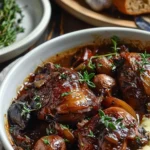
Experience the comforting and rich flavors of Coq au Vin with a twist! This recipe combines juicy turkey bacon and tender chicken ham, offering a delightful take on the classic dish.
- Prep Time: 15 minutes
- Cook Time: 40 minutes
- Total Time: 55 minutes
- Yield: 4 servings 1x
- Category: Main Dish
- Method: Stovetop
- Cuisine: French
- Diet: Gluten-Free
Ingredients
- 4 slices turkey bacon
- 2 cups diced chicken ham
- 1 cup red wine
- 2 cups chicken broth
- 1 onion, chopped
- 2 cloves garlic, minced
- 2 cups mushrooms, sliced
- 2 carrots, sliced
- 2 tablespoons olive oil
- 2 tablespoons flour
- 1 teaspoon thyme
- 1 bay leaf
- Salt and pepper to taste
Instructions
- In a large pot, cook the turkey bacon until crispy. Remove and set aside.
- In the same pot, add olive oil and sauté onions, garlic, carrots, and mushrooms until tender.
- Add diced chicken ham and diced crispy bacon back to the pot.
- Sprinkle flour over the mixture and stir for a minute.
- Pour in red wine and chicken broth, then add thyme, bay leaf, salt, and pepper.
- Bring to a simmer and let cook for 30-40 minutes until the sauce thickens.
- Serve hot and enjoy!
Notes
- Feel free to substitute chicken ham with regular ham if preferred.
- This dish pairs well with mashed potatoes or crusty bread.
Nutrition
- Serving Size: 1 plate
- Calories: 350
- Sugar: 2g
- Sodium: 800mg
- Fat: 22g
- Saturated Fat: 7g
- Unsaturated Fat: 10g
- Trans Fat: 0g
- Carbohydrates: 10g
- Fiber: 2g
- Protein: 25g
- Cholesterol: 70mg
Keywords: Coq au Vin, turkey bacon, chicken ham, easy recipes